
EMAIL TO MATTHEW MARSH KC – THREESTONE LAW (REPLACING JAMES CORBETT KC AS THE JUDGE IN THE CASE AGAINST FRIENDS PROVIDENT INTERNATIONAL AND UTMOST INTERNATIONAL)
to:matthewmarsh@threestone.law
from: angie.brooks@pension-life.com
Dear Mr. Marsh
I am writing to you as the new judge who will replace James Corbett in the case against Friends Provident International and Utmost International.
In order to assist you understand the wider context to the case against the defendants (and in light of James Corbett’s disgraceful failure to deliver a judgement), I set out below three additional background information summaries on the case. You probably won’t find any of this in the evidence before you.
I am aware you may decide not to read this. However, at least it will be in the public domain even if you ignore it. But first, please meet one of the many Friends Provident International victims whose life has been ruined by Friends Provident International: Ron Leeman.
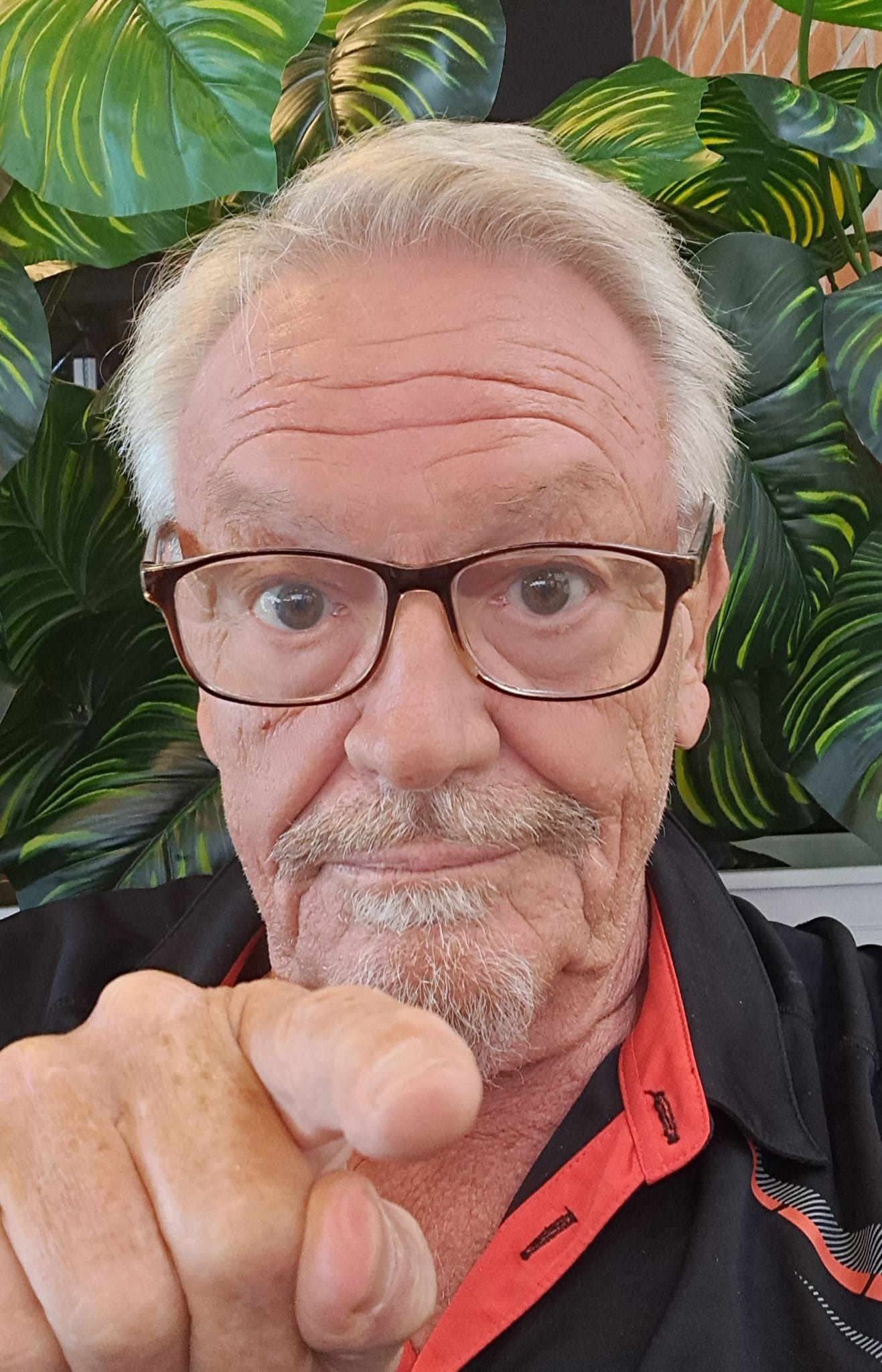
Ron has been one of the claimants in the Signature Litigation case for a number of years. He has certainly managed to retain his dignity and determination. But his mental and physical health have been badly affected. Others (including Peter Kells – the original test claimant in this matter) and more than 20 others have died waiting (in vain) for justice.
Ron’s life was devastated in 2011 when he lost his pension to Richard Malpass of Credenda – an unregulated company in Thailand. The Thai SEC took criminal action against Malpass as a result of a complaint by a group of 60 similar victims who collectively lost US$15million on the LM Managed Performance Fund Ponzi scheme. LM was heavily promoted by unregulated advisers such as Malpass for undisclosed commissions of 15%. As an Unregulated Collective Investment Scheme (de facto high risk and unsuitable for retirees), the LM MPF information memorandum itself stated that the fund was only suitable for professional investors.
Click here https://www.andrew-drummond.news/20303-2/ for an excellent piece by Andrew Drummond summarising the criminal activities of Malpass and his various associates such as Neil Robbirt, Andrew Wood, Gavin Broad, Gary Bradford, Eric Jordan, Malcolm Lewis and Mark Kirkham.
Friends Provident International and Utmost International have a long history of giving terms of business to unregulated cowboys and fraudsters – such as Richard Malpass. FPI and Utmost facilitated the fraudulent promotion of the LM MPF fund by featuring it on their investment platform. FPI also allowed unregulated firms such as Credenda to have terms of business and to receive the secret commissions for selling insurance bonds and high-risk investments to retail, low-risk clients – such as Ron Leeman.
An important part of the fraud perpetrated by Credenda (and many other firms in typical financial-scammer territories such as Dubai, Malta and Cyprus) was the forgery of the clients’ signatures:
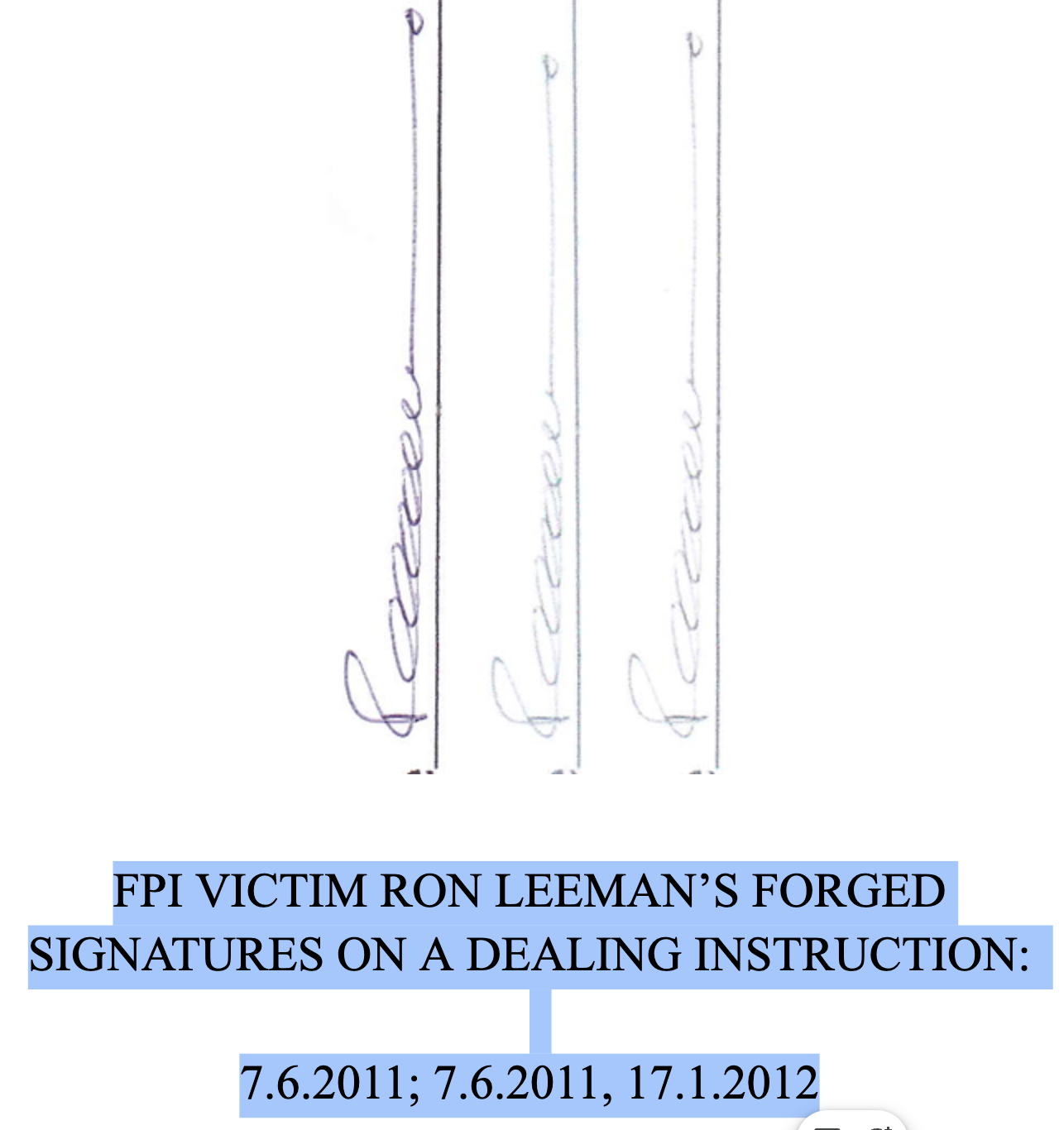
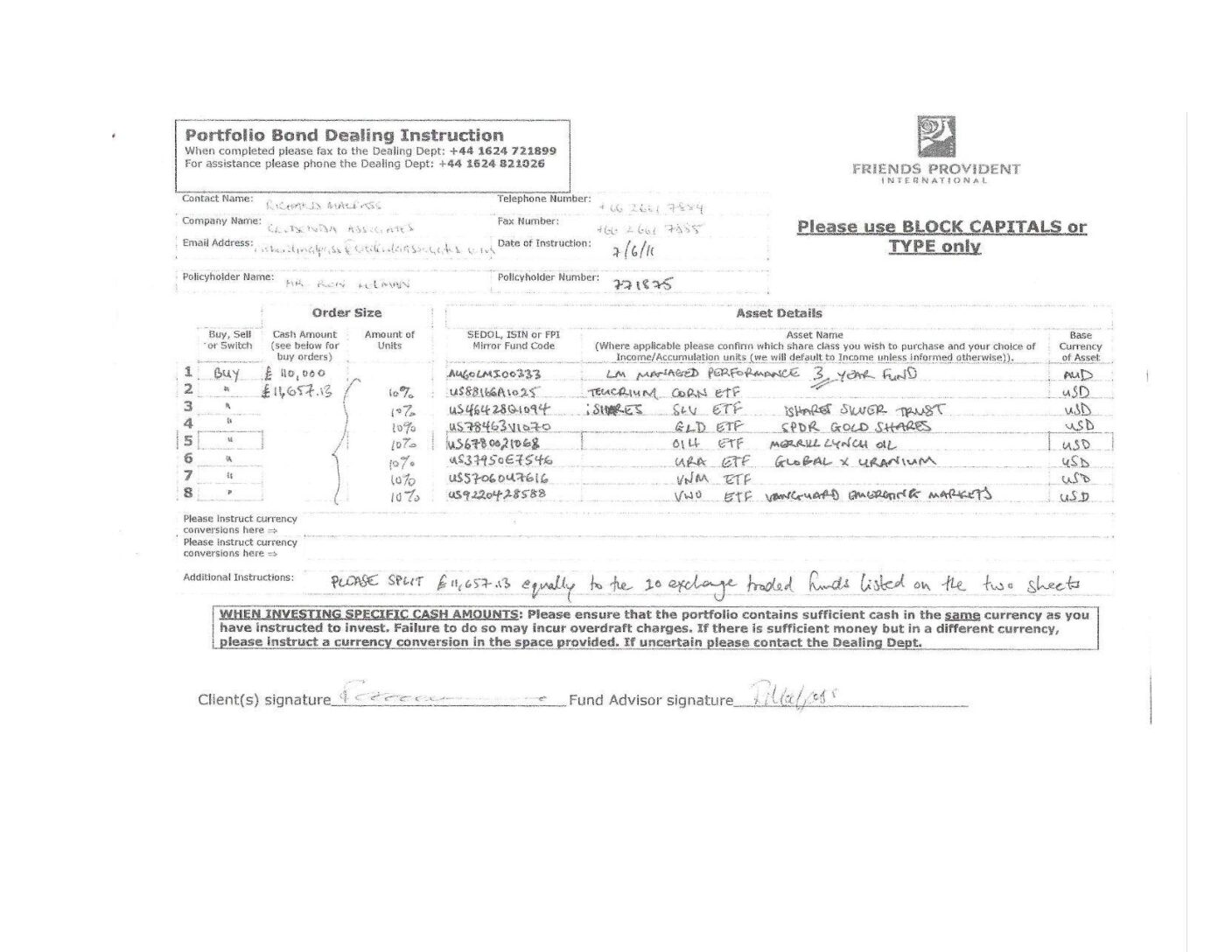
Above are three of Ron’s signatures on FPI dealing instructions – all clearly identical. The one on the left is the original, and the two on the right will be copies subsequently made fraudulently and without Ron’s permission or knowledge. This is a very common practice among financial services fraudsters. The practice has been routinely accepted by Friends Provident International and Utmost International for a decade and a half.
1. Background to the international insurance bond fraud and mis selling scandal
The insurance bond industry has been at the heart of a scandalous international fraud for at least 16 years. The victims of this widespread financial crime include not just the 739 Signature claimants, but many thousands more across the globe.
The Isle of Man – with its feeble regulation and high tolerance for corruption – has largely facilitated this Worldwide financial crime. Friends Provident International as well as Utmost International are two of the principal perpetrators – alongside their partners in crime to whom they pay the huge undisclosed commissions.
The insurance bond’s purported tax advantages have little or no effect offshore (i.e. outside the UK), and also simply do not work within a pension. The pension itself is the wrapper – nobody needs a second wrapper (that’s just like a judge wearing two wigs).
Spain, for example (a leading British expat jurisdiction), frowns on insurance bonds as the Spanish government does not consider them to be genuine insurance products as there is no “risk” on the part of the underwriters. Yes, there are “Spanish-compliant” insurance bonds – but that is only from the point of view of tax reporting – not any indication that Spain “approves” of them. In fact, you will find that many Spanish banks refuse to accept any payments from an entity in the Isle of Man as it is recognised as an unethical and poorly-regulated tax-dodging jurisdiction. From Spain’s point of view, the Isle of Man is ranked alongside the equally-dubious likes of Jersey, Guernsey and Malta.
One of the many problems with insurance bonds is the fact that they are expensive, inflexible and hard for the ordinary retail investor to understand. The swingeing quarterly charges – which are mainly there to claw back the undisclosed commissions to the conmen who flog them to the victims – will always have a “dragging” effect on the portfolio value. And any investments would have to work very hard indeed to try to keep up with these disproportionate and unfair charges. As soon as one also introduces high-commission-bearing, high-risk assets into the mix, there is a double dose of damage to a portfolio (from which it is unlikely ever to recover).
The charges are based on the initial portfolio value (i.e. the original premium paid into the insurance bond) – and if this decreases (or disappears altogether – as in the case of the LM MPF fund) – the charges still stay the same. The only way out of the toxic bond is to pay a huge early-exit penalty. In fact, there are many instances where the portfolio becomes nil or even negative – but the bond providers still keep applying their charges (sometimes driving a portfolio well into the red).
Few – if any – offshore investors actually need an insurance bond. They are mostly conned into these products because they benefit the broker/adviser/introducer – not because the investors themselves need one. The products are there purely to facilitate the fraudulent undisclosed commissions paid to the conmen posing as “advisers”.
FPI and Utmost have – for a decade and a half – done business with a wide variety of unregulated, commission-hungry firms and individuals. This includes firms with only an insurance license – or no license at all – and individuals with criminal records or regulatory sanctions such as Mark Donnelly and Gordon Couch of Brite Advisors; Darrin Brownlee-Jones and Paul Reynolds of Holborn Assets.
In fact, despite seeing thousands of fraudulent transactions – resulting in appalling losses for huge numbers of victims – the bond providers rarely (if ever) withhold payment of commissions from the fraudsters (despite promising in their terms & conditions to do so):
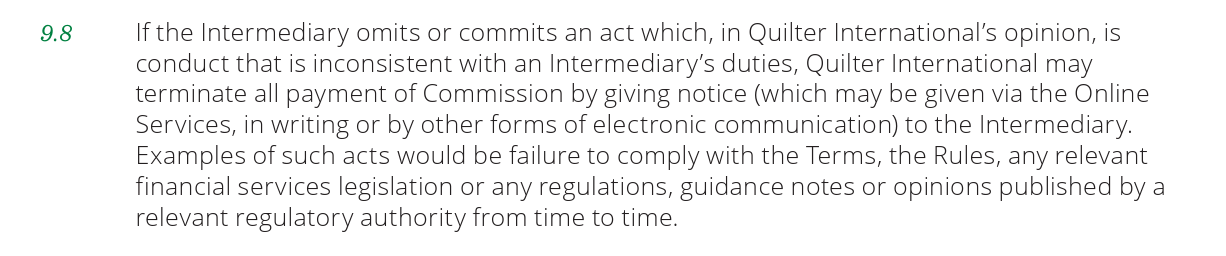
A prime example of this was in the case of the Continental Wealth Management fraud in Spain – whereby Old Mutual/Quilter International and Generali (now amalgamated as Utmost International) carried on paying undisclosed commissions to the firm for years after huge structured-note losses started to accrue in 2013 for nearly 1,000 clients.
From 2016 to 2017, Quilter International and Generali (i.e. Utmost International) paid out €1.219m in insurance bond commission and €1.388m in investment (structured note) commission to the unregulated firm – CWM SL. These payments continued to be made despite the fact that they could see hard evidence that a massive structured-note investment fraud had been perpetrated by the firm for over seven years. And that this fraud had resulted in millions of pounds’ worth of losses for 1,000 policyholders.
2. The treatment of policyholders/investors by Friends Provident International and Utmost International
Ron Leeman was neither a HNW, nor a sophisticated nor a professional investor. From the (relatively) low size of his premium, it was clear that he had a modest amount to invest. And it was in a precious pension – not “spare” cash to be gambled away speculatively. Ron was clearly and obviously a retail investor. As were all 739 of the Signature claimants.
All the World’s similar victims are people who have worked all their lives and had deserved to be protected by the very financial institutions (FPI and Utmost) who failed them. So let us look at why FPI and Utmost treated Ron and all the other victims so negligently.
Insurance bonds are not products which “walk out of the door with the customer – never to be seen again”. The bonds remain within the purview of the bond providers themselves for the duration of the term of the product (i.e. the number of years the victims are locked into the products). FPI and Utmost International retain complete control over the bond and the portfolio of investments at all times.
- They execute the transactions (frequently acting on investment dealing instructions with forged client signatures – such as the above example in Ron Leeman’s case)
- They continue to accept dealing instructions from a broker/adviser long after they have seen and reported on evidence of heavy losses due to irresponsible, high-risk investments
- They produce the transaction histories, valuations and statements
- They apply the charges – long after a portfolio value is damaged beyond repair
- They pay the undisclosed commissions to the brokers – long after they report on the serious losses caused by the irresponsible investments made by them
- They provide the investments (without carrying out any due diligence on them)
The Friends Provident International website claims: “Our product range is tailored to help you achieve your financial goals and meet your individual needs. We have 35 years of international experience providing savings, investment and protection to customers.”
The Utmost website states: “Utmost is a leading global provider of insurance-based wealth solutions. We provide trusted, unit-linked offerings designed to help our clients to manage and preserve their wealth.”
And yet, neither of those claims is true. Not even remotely. The product range is not tailored for anything to do with financial goals or individual needs – as insurance bonds are too expensive and too inflexible for the vast majority of investors. Clients certainly can’t preserve their wealth with charges based on initial premiums which do not decrease in line with a diminishing portfolio value. And insurance bonds should never, ever, be used for pensions.
But most importantly, neither FPI nor Utmost distinguishes between retail and professional investors. They allow brokers – often unregulated – to invest retail clients’ money in high-risk UCIS funds, corporate bonds and structured notes (all of which pay large secret commissions). Put simply, there is no “protection” whatsoever by insurance bond providers such as FPI and Utmost.
In 2015, Old Mutual International (now Utmost International) conducted an internal “asset review” and found that many of the investment products they were featuring on their investment platform represented “poor value for money” because of the high commissions (often from 8% to 20%).
OMI cited two of the worst brokers for using and abusing these products as being deVere Group and GlobalEye.
OMI quoted deVere’s commission model as taking 4% for advice plus 4% as an “arrangement fee” (undisclosed). This meant that the client paid 104% for an investment product which was worth 96% of the issue price. OMI’s Asset Review Committee proposed charging asset providers a £500 fee for onboarding new investments (something which was vigorously opposed by the asset providers themselves). OMI suggested that this measure could help stop the “race to the bottom” by some of the brokers with whom they had terms of business.
3. Acknowledgement of liability for victims’ losses and offer to pay compensation by Old Mutual International (now Utmost International)
In June 2018, Peter Kenny – the Managing Director of Old Mutual International (now Utmost International) – acknowledged liability for the Continental Wealth Management victims’ losses. Do bear in mind that Mr. Kenny himself was a former Isle of Man regulator. He agreed to settle in the course of several phone calls and through various emails. He agreed to compensate 27 of my Pension Life’s clients who had suffered terrible losses due to investments in high-risk structured notes from Leonteq, Nomura, Commerzbank and Royal Bank of Canada.
Mr. Kenny was provided with the policy numbers for each of these 27 individuals and he agreed to set up a meeting with OMI’s lawyers at OMI’s Millenium Bridge House offices in London so that he could sign off the compensation payments.
Copied into the emails were Mr. Kenny’s colleagues at OMI: Duncan Eardley, Steve Braudo and Paul Feeney of Quilter as well as Stewart Davies of Momentum Pensions.
Highly motivated by the forthcoming IPO, Kenny and his colleagues were keen to settle and to stop me from publishing further critical blogs about OMI’s catalogue of failures in the CWM case:
However, at the last minute, Mr. Kenny cancelled our scheduled meeting – claiming that OMI’s priority was the litigation against Leonteq. He also announced he intended reneging on his clear undertaking to pay compensation to Pension Life’s clients.
In March and December 2018, Old Mutual International issued proceedings in the Isle of Man against Leonteq (structured note provider in Switzerland). The basis for the claim included misrepresentation, unfair contract, fraudulent misrepresentation, unfair contract terms, deceit, conspiracy, negligence, breaches of fiduciary duty, dishonest assistance, unjust enrichment and secret commission.
This claim by OMI involved the quest for damages arising from 1,386 structured notes which had an extra undisclosed 2% commission added to the existing 6% undisclosed commission. OMI knew about the 6% undisclosed commission (and were quite happy to execute 10,563 individual transactions on this basis). But while OMI thought it was perfectly acceptable for thousands of victims to be damaged by this secret 6%, it didn’t like the extra 2% which brought the total secret commission up to 8% – and beyond (sometimes as much as 19.22% in total).
OMI was, of course, not the only insurance bond provider to facilitate this fraud. Friends Provident International, Generali, SEB, RL360, Investors Trust, Irish Life International and Julius Baer all participated enthusiastically with this huge amount of highly-profitable business – which destroyed thousands of victims’ portfolios.
OMI did, eventually, settle with Leonteq for an undisclosed amount (with the original claim value having been £28m). And some time after that, some small compensation payments were made into the victims’ QROPS – mostly Momentum and STM. However, these payments were nowhere near the total Leonteq structured note losses. And no explanation was ever provided to the victims as to how these payments were calculated.
Regards, Angela Brooks – Pension Life